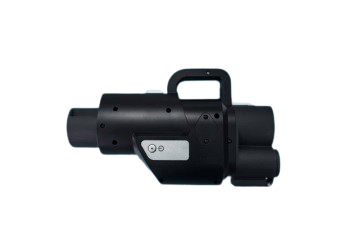
App-Enabled CCS1 to GB/T Adapters – Why Smart Monitoring Is Changing the Game
For years, EV charging adapters were simple passive devices—just a physical bridge between two connector types. But for DC fast-charging adapters, passive design is not enough. Today’s premium CCS1 to GB/T adapters are evolving into smart devices with app connectivity, real-time monitoring, and over-the-air firmware updates.
Here is why smart adapters matter—and why they are becoming the standard for commercial EV projects across Europe.
What Is a CCS1 to GB/T Adapter?
Before diving into smart features, let’s clarify what this adapter does—and why it matters in Europe specifically.
CCS1 (Combined Charging System 1) is the DC fast-charging standard used primarily in North America and South Korea, combining a Type 1 (J1772) AC connector with two additional DC pins .
GB/T is China’s national EV charging standard, using CAN bus communication (GB/T 27930) for both AC and DC charging.
CCS2 is the DC fast-charging standard used across Europe, combining a Type 2 AC connector with two DC pins .
Here’s the key point: a CCS1 to GB/T DC adapter enables Chinese-made GB/T vehicles to charge at European CCS1 charging stations. But why would a GB/T vehicle be charging at a CCS1 station in Europe?
Why CCS1 to GB/T in Europe?
This is the most common point of confusion, so let’s clarify:
| Scenario | Explanation |
|---|---|
| Chinese GB/T EV imported to Europe | If the vehicle was originally sold in China (GB/T port), but the owner has moved it to Europe—it needs an adapter to charge locally |
| European charging network | Most European public DC chargers are CCS2, not CCS1 |
| So where does CCS1 come in? | Some European charging networks (particularly older installations) use CCS1, especially in certain Eastern European markets or mixed-standard sites. Additionally, some early European EV models and certain imported vehicles use CCS1 ports |
However, in practical terms, the vast majority of GB/T vehicle owners in Europe need a CCS2 to GB/T adapter, not CCS1.
But Wait—Is CCS1 Actually Used in Europe?
The short answer: not widely. CCS1 is the North American standard based on the J1772/Type 1 AC connector, while Europe standardized on CCS2 based on the Type 2 (Mennekes) connector for three-phase grid compatibility .
The primary use case for a CCS1 to GB/T adapter in Europe would be:
-
Chinese GB/T vehicles imported to North America (where CCS1 is the dominant standard)
-
Mixed-standard fleet operations involving vehicles from both CCS1 and GB/T regions
-
Charging at older or non-standard European sites that happen to use CCS1
For the vast majority of GB/T vehicles in Europe, the correct adapter is CCS2 to GB/T. Please verify your local charging network’s connector type before purchasing.
What Does “App-Enabled” Mean for a CCS1 to GB/T Adapter?
An app-enabled adapter connects to your smartphone via Bluetooth, allowing you to monitor and control the charging process directly from your phone.
Unlike traditional adapters that provide no feedback, a smart adapter gives you visibility into exactly what is happening during each charging session.
Key Features You Can Monitor Through the App
Real-Time Charging Data
-
Voltage and current readings during active charging
-
State of Charge (SOC) progression
-
Charging duration and energy delivered
-
Device status: idle, connected, or charging
Fault Diagnosis and History
-
Immediate fault notifications
-
Detailed fault logs for troubleshooting
-
Charging session history for record-keeping
Simplified Operation
-
No need for external diagnostic tools—technicians can check data from a phone
-
Faster troubleshooting with fault logs that reduce communication time with support teams
Why App Control Matters for Commercial EV Projects
For fleet operators, charging infrastructure contractors, and distributors, app-enabled adapters offer tangible operational benefits:
1. Easier Field Operations
Technicians no longer need specialized diagnostic equipment. If a charging session fails, they can check fault data directly from their smartphone—saving time and reducing support calls.
2. Faster Troubleshooting
Detailed charging history and fault logs help support teams identify issues quickly. This is particularly valuable for cross-border fleets where vehicles may charge at multiple locations.
3. Better After-Sales Service
With access to charging session records, service teams can track adapter performance over time and proactively address potential issues before they become problems.
The Future-Proofing Advantage: Firmware Updates via App
Perhaps the most important feature of app-enabled adapters is firmware update capability.
EV models and charging stations evolve. New vehicles may implement communication protocols differently, and station firmware updates can introduce changes that affect compatibility .
A quality smart adapter allows you to:
-
Update firmware easily via USB-C or Bluetooth
-
Receive lifetime software support from the manufacturer
-
Maintain compatibility as charging networks evolve
This is not just a convenience—it is essential for long-term reliability. Without firmware update support, an adapter that works today may fail tomorrow after a station update.
Bluetooth Connectivity: What to Expect
Most smart adapters use Bluetooth for app connectivity. Typical features include:
-
Real-world range: Tested up to 15 meters (environment dependent)
-
Compatibility: iOS and Android app support
-
Low power consumption: Internal batteries recharge during normal operation
Who Needs a CCS1 to GB/T Adapter?
| User Type | Use Case |
|---|---|
| Imported GB/T vehicle owner in North America | Chinese EV (BYD, Nio, Xpeng, Geely) brought to US/Canada—needs to charge at CCS1 stations |
| Fleet operator with mixed vehicles | Managing a fleet containing both GB/T and CCS1 vehicles |
| Automotive importer/distributor | Pre-selling or delivering Chinese EVs to North American or mixed-standard markets |
| Charging infrastructure provider | Ensuring all vehicles can access your charging network |
Is a Smart CCS1 to GB/T Adapter Right for You?
| Scenario | Smart Adapter Recommended? |
|---|---|
| Individual EV owner charging occasionally | Not essential, but useful |
| Fleet operator with multiple GB/T vehicles | ✅ Yes |
| Charging infrastructure contractor | ✅ Yes |
| Distributor selling to commercial buyers | ✅ Yes |
| Budget-conscious personal user | Optional, but consider firmware update capability |
For commercial applications, the ability to update firmware and monitor charging performance is a strong business case. The small additional investment in a smart adapter can prevent costly downtime and compatibility issues down the road.
Important Note: Active Protocol Conversion Required
Both CCS1 and CCS2 use PLC (Power Line Communication) based on ISO 15118, while GB/T uses CAN bus based on GB/T 27930 .
A passive adapter (with no electronics) will not work for DC fast charging—the station and vehicle cannot communicate, and the charging session will fail .
Always choose an adapter with active protocol conversion electronics for reliable DC charging.
The Bottom Line
App-enabled CCS1 to GB/T adapters represent the next generation of EV charging interoperability. They offer:
-
Transparency: Real-time data on every charging session
-
Reliability: Faster troubleshooting and better support
-
Future-proofing: Firmware updates keep the adapter compatible
For businesses managing GB/T fleets, smart adapters are not a luxury—they are a practical necessity.
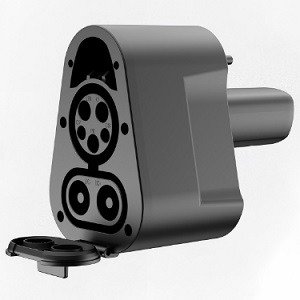
Explore our [product] for app-enabled CCS1 to GB/T adapters with Bluetooth monitoring and lifetime firmware support.


DC-768x768.png)