EV Charging Adapters for Global Market
High-quality CCS2, Type2, GBT, NACS, J1772 charging adapters designed for different standard electric vehicles
Specialized Products
One adapter, all standards, solve your CCS2/GBT/NACS/CHAdeMO charging headaches once and for all.
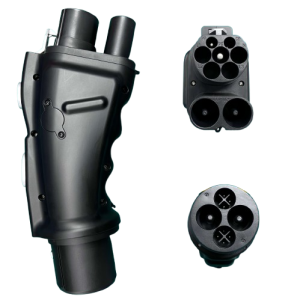
CCS2-CHAdeMO
Engineered with top-tier safety and durability, this adapter lets you charge your Japanese CHAdeMO standard EV at any CCS2 station with full peace of mind, every single time.
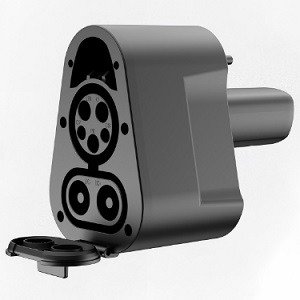
CCS2-NACS
Built for uncompromising safety and long-lasting performance, it seamlessly connects your Tesla to CCS2 charging stations, making every charge simple, stable and worry-free.
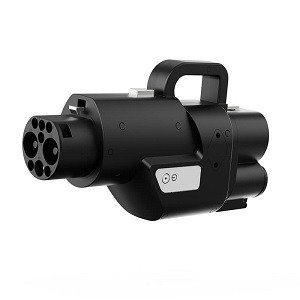
CCS2-GB/T
Engineered for zero-hassle travel, this CCS2-to-GB/T adapter makes your GB/T standard EV fully compatible with CCS2 stations, for smooth, reliable charging on every journey.
Who We Are?
SP Power is a leading EV charging solution provider dedicated to the European market, specializing in reliable, high-performance electric vehicle charging equipment. Our core product range includes CCS fast chargers, wall-mounted EV chargers for residential and commercial use, portable chargers for flexible on-the-go charging, and high-power DC fast charging stations. We also focus on professional Tesla charging adapters designed specifically to solve charging compatibility issues for Tesla vehicles across Europe. Committed to quality and versatility, SPP delivers robust, future-proof charging solutions to meet all European EV charging demands.
Frequently Asked Questions
One adapter, all standards, solve your CCS2/GBT/NACS charging headaches once and for all.
How do I know if your adapter works with my EV and the charging station?
As a global leader in EV charging interoperability, our adapter portfolio covers all major standards — NACS (SAE J3400), CCS1, CHAdeMO, and J1772. To choose the right one, simply identify your vehicle’s inlet type and the plug type of the charger you intend to use. For example:
Tesla (NACS) owners wanting to use CCS fast-chargers → choose our CCS to NACS adapter.
Non-Tesla (CCS) owners wanting to access Tesla Superchargers → choose our NACS to CCS adapter.
Every product page includes a clear compatibility matrix and a VIN-check tool to eliminate guesswork.
Are third-party EV adapters safe? What certifications do your products hold?
Safety is non-negotiable. We strongly advise against uncertified adapters, which are the leading cause of overheating, pin damage, and even vehicle-side failures. Our products are among the first in the industry to achieve UL 2252 — the world’s first dedicated safety standard for EV cord sets and adapters. This covers rigorous testing for electrical insulation, thermal cycling, dielectric withstand, and flame resistance. Additionally, we comply with SAE J1772 and IEC 62196 mechanical and electrical requirements. Every unit is 100% factory-tested before shipping.
What’s the difference between AC & DC adapters, how do I pick the right type?
This is the single most critical distinction. AC and DC adapters are NOT interchangeable.
AC adapters (e.g., J1772 to NACS) are used for Level 2 charging at homes, hotels, and workplaces — slower, overnight charging.
DC adapters (e.g., CCS to NACS, NACS to CCS) are for public fast-charging stations — high-power, 15- to 40-minute sessions.
Using an AC adapter on a DC charger (or vice versa) will fail to communicate and may damage both the adapter and the vehicle. Our product labels, packaging, and online guides use color-coded icons to make this distinction foolproof.
What are the “must-do” and “never-do” rules for safe, long-lasting use?
Follow these simple best practices:
✅ DO:
Inspect the adapter and vehicle ports for debris, moisture, or damage before each use.
Insert firmly until you hear/feel a positive latch engagement.
Store in the supplied protective case in a clean, dry place.
❌ NEVER:
Never use an AC adapter on a DC fast-charger, or vice versa.
Never daisy-chain multiple adapters — this creates uncontrolled voltage drops and fire hazards.
Never force a connection — if it doesn’t fit smoothly, stop and verify compatibility.
Always unplug the adapter from both the car and the charger after each session — do not leave it dangling.
Can I use your adapters in heavy rain, extreme heat, or sub-zero temperatures?
Yes. Our products are validated across a -30°C to +85°C operating range. The IP-rated sealing prevents moisture ingress even in driving rain, and the thermal design dissipates heat efficiently during summer peak loads. In cold climates, the robust latch mechanism and flexible cable materials (where applicable) remain functional without becoming brittle. For optimal performance, we do recommend wiping the connector ends dry before plugging in — a small habit that ensures the cleanest electrical contact.
Will using an adapter reduce my charging speed or limit the power output?
Absolutely not. A premium adapter is engineered to be transparent to the charging session — it should neither cap nor degrade power. Our adapters are rated for the highest current levels available today (up to 500A+ for DC models) and feature ultra-low contact resistance. The actual charging speed is always determined by your vehicle’s onboard battery management system (BMS) and the charger’s output. Our robust thermal management ensures sustained high-power delivery without derating, so you get the full speed your car and charger can negotiate.
How durable are these adapters for daily use? Are they weatherproof?
Built for the real world, our adapters feature:
High-impact, UV-resistant engineering thermoplastics.
Gold-plated or silver-alloy contacts for corrosion resistance and >10,000 insertion/withdrawal cycles.
IP54 to IP67 ingress protection (model-dependent) against dust and water splashes — safe for rain, snow, and dusty job sites.
The latch mechanism is designed with audible feedback to confirm a secure, vibration-proof connection, preventing arcing from loose fits.
With most automakers adopting NACS, will my adapter become obsolete soon?
The transition to NACS is underway, but it will be a multi-year coexistence period — millions of CCS/J1772 vehicles and chargers will remain in service. Our strategy is bidirectional enablement:
New NACS owners can still use legacy CCS fast-chargers via our CCS→NACS adapter.
Legacy CCS owners can access the growing NACS (Tesla) Supercharger network via our NACS→CCS adapter.
Far from being a stopgap, our adapters are investment protectors that expand your charging options across both ecosystems. We also actively participate in the CharIN and SAE committees shaping the next-generation standard.
Do your adapters support V2G or V2H bidirectional power flow?
You’re pointing to the future of energy ecosystems. Currently, the overwhelming majority of public charging infrastructure is unidirectional (grid-to-vehicle). However, we are actively engineering our next-generation adapter platform to fully comply with ISO 15118-20 (the communication standard for bidirectional energy transfer). While our current product line is optimized for reliable one-way charging, we have already validated hardware readiness for power reversal. Stay tuned — we will be among the first to market with a UL-certified bidirectional adapter once the ecosystem (chargers and vehicles) matures.
What warranty and after-sales support do you offer?
We provide a standard 1-year warranty against manufacturing defects on all our adapters.
For customers outside of China, all warranty and RMA (Return Merchandise Authorization) services are handled through our local authorized distributors or sales partners. They are fully equipped to assess, process, and resolve any product issues on our behalf, ensuring you receive timely and localized support without the complexity of cross-border logistics.
For warranty claims, simply contact the local dealer or platform where you made your purchase — they will guide you through the process.
Unlimited Resources
One adapter, all standards, solve your CCS2/NACS charging headaches once and for all.
DC.png)